How Dental Implants Work: The Complete Guide for International Patients in Vietnam

Michael sat in my consultation room at our Ho Chi Minh City clinic, staring at the 3D scan of his jaw on the screen. “I understand what an implant is,” he said, “but I still don’t get how a metal post in my bone becomes a tooth. How does that actually work?”
I’m Dr. Emily Nguyen, Principal Dentist at Picasso Dental Clinic, and this is one of the most important questions I hear. Since 2013, I’ve explained the implant process to thousands of international patients from 65 different countries. Understanding the science behind dental implants isn’t just interesting, it helps you make better decisions and sets realistic expectations.
After treating over 70,000 patients across our locations in Hanoi, Da Nang, Ho Chi Minh City, and Da Lat, I’ve refined how I explain this process. The remarkable thing about dental implants is that they work with your body’s natural healing abilities, not against them. Your bone literally grows into and around the titanium, creating a fusion stronger than many natural tooth roots.
Let me walk you through exactly how dental implants work, from the moment we place them to the day you bite into an apple without thinking twice.
The Science Behind Osseointegration: Why Titanium Bonds With Bone
The entire implant process depends on a biological phenomenon called osseointegration. This is when bone cells grow directly onto the titanium surface, creating a permanent bond. It sounds like science fiction, but it’s happening inside thousands of mouths right now, including many of our international patients who received implants at Picasso Dental Clinic years ago.
Here’s what makes titanium special: your body doesn’t recognize it as foreign. Unlike other metals that trigger immune responses, titanium is biocompatible. Your bone cells treat the titanium surface like natural bone structure and begin growing onto it immediately after placement.
I witnessed this firsthand during my training, examining implants under microscopes. The bone doesn’t just touch the titanium, it actually integrates into the microscopic rough surface we create on every implant. Picture tree roots growing into and around rocks. That’s similar to how bone cells attach to titanium at a microscopic level.
The process happens in distinct phases. During the first few days after I place an implant at our Hanoi or Da Nang clinic, blood cells form a clot around the titanium post. This clot becomes a scaffold for new bone formation. Within weeks, specialized cells called osteoblasts begin depositing new bone directly onto the implant surface.
Over the next three to four months, this bone continues maturing and strengthening. By the time we’re ready to attach your crown, the implant has become as stable as a natural tooth root, sometimes even more stable. I’ve measured implant stability in patients from Australia to Sweden, and the success rate of this biological process exceeds 97% when proper protocols are followed.
The Step by Step Process: What Happens Inside Your Jaw
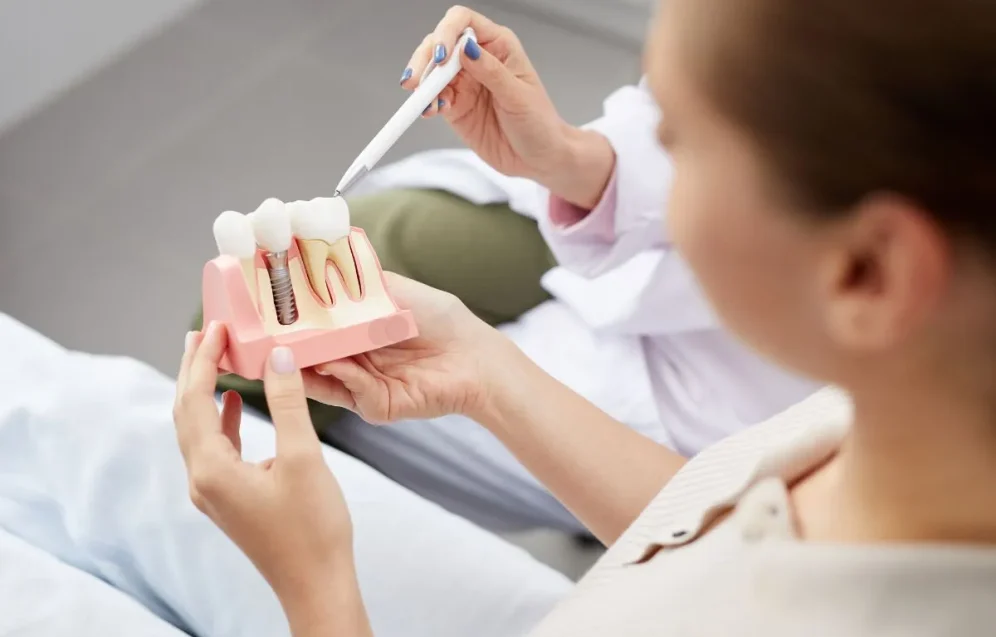
When international patients visit our Ho Chi Minh City or Hanoi locations, I always show them exactly what will happen during each stage. Understanding the process reduces anxiety significantly.
Stage one begins with precise planning. Before I place a single implant, we create a detailed surgical guide using your 3D CBCT scan. This technology allows me to see your bone density, nerve pathways, sinus cavities, and blood vessel locations. I’m essentially creating a blueprint for exactly where your implant will sit, down to the millimeter.
Last month, I treated a couple from Singapore at our Da Nang clinic. The husband needed an implant in his upper jaw, very close to his sinus cavity. Using computer-guided surgery, I could plan the exact angle and depth to avoid any sinus complications. This level of precision wasn’t possible when I started practicing in 2013, and it’s transformed outcomes for our international patients.
The surgical day involves controlled bone preparation. After numbing the area completely, I make a small incision in your gum tissue to expose the jawbone underneath. Using specialized drills that increase in diameter gradually, I create a precise space in your bone. This isn’t aggressive drilling, it’s methodical and careful, with constant irrigation to prevent overheating.
Think of it like preparing a foundation for a building. The hole must be the exact size and shape for the implant to achieve optimal stability. Too loose, and the implant won’t integrate properly. Too tight, and we risk damaging the bone. After placing thousands of implants across our four Vietnam locations, this precision has become second nature.
Implant placement requires both skill and feel. Once the site is prepared, I insert the titanium implant by hand or with a controlled torque device. I’m measuring the resistance as the implant threads into your bone. This tactile feedback tells me about bone density and initial stability.
The implant sits slightly below your gum line when we’re finished. I close the gum tissue over it with sutures, and from the outside, you can’t see anything. But inside your jaw, the remarkable process of osseointegration has already begun.
Healing happens on a biological timeline. Your body cannot be rushed. Over the next three to four months, bone cells systematically grow onto and into the implant surface. This happens whether you’re back home in Melbourne or exploring other parts of Vietnam after visiting our Da Lat clinic.
During this healing period, many of our international patients ask what’s actually happening inside their jaw. Blood vessels are forming around the implant, bringing nutrients and oxygen. Osteoblasts are laying down new bone matrix. The bone is remodeling itself to accommodate and incorporate this new titanium structure. It’s active healing, even though you can’t feel it happening.
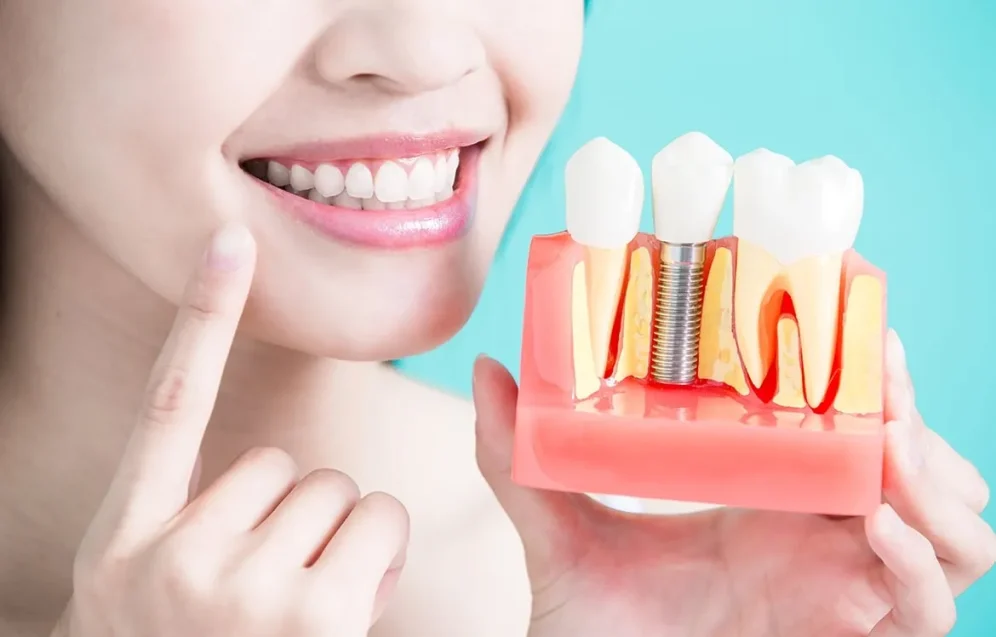
Crown attachment completes the transformation. Once osseointegration is complete, you return to any of our Picasso Dental Clinic locations for the final phase. I make a small incision to expose the top of your implant and attach an abutment. This connector piece sits at gum level and provides the attachment point for your crown.
The custom crown I place on top is crafted to match your natural teeth perfectly. We take impressions or digital scans, noting the exact color, shape, and bite relationship. When the crown is cemented or screwed into place, the implant begins functioning exactly like your natural tooth.
How Implants Handle Chewing Forces: The Biomechanics
A patient from Japan asked me an excellent question during her follow-up at our Hanoi clinic: “How does an implant handle the pressure of chewing if it’s just held in by bone?” This gets to the heart of how implants actually function long term.
Natural teeth have a built-in shock absorber. Between your tooth root and jawbone sits a thin layer called the periodontal ligament. This ligament has nerve endings that sense pressure and allows microscopic movement. It’s why natural teeth have a slight “give” when you bite down hard.
Implants work differently. They’re rigidly fixed to your bone through osseointegration. There’s no periodontal ligament, no cushioning layer. When you bite down on an implant-supported crown, the force transfers directly to your jawbone. This sounds concerning, but it’s actually beneficial.
Your jawbone needs stimulation to maintain its density. When you chew on an implant, you’re stimulating the surrounding bone just like a natural tooth root would. This prevents the bone loss that typically occurs after tooth extraction. I’ve seen this on countless follow-up scans of patients I treated years ago at Picasso Dental Clinic. The bone around properly placed implants remains stable or even increases in density.
The implant design itself manages forces intelligently. The threaded surface distributes chewing pressure across a larger bone area, rather than concentrating it at one point. The tapered shape mimics natural root anatomy. The materials we use at our Da Nang and Ho Chi Minh City clinics are engineered specifically to flex slightly under extreme pressure, protecting both the implant and your bone.
I explain to patients that a properly placed implant can handle anything your natural teeth can handle. You can eat steak, bite into apples, chew tough foods without worry. Among the 70,000+ patients we’ve treated from 65 nationalities, I’ve never had a properly integrated implant fail due to normal chewing forces.
What Can Go Wrong and How We Prevent It
I believe in complete transparency with international patients. While dental implants have exceptional success rates, understanding potential complications helps you make informed decisions.
Early failure happens when osseointegration doesn’t occur. In about 2 to 3% of cases, the bone doesn’t integrate with the implant properly. This typically happens within the first few months. Risk factors include smoking, uncontrolled diabetes, and insufficient bone density.
At Picasso Dental Clinic, we screen carefully for these risk factors during your initial consultation. If I identify concerns, we address them before surgery. For smokers, I strongly recommend quitting at least two weeks before and after the procedure. For patients with diabetes, we coordinate with their physicians to ensure optimal blood sugar control.
Infection can compromise implant success. This is rare when proper protocols are followed, but it’s why we’re meticulous about sterile technique across all our Vietnam locations. We also provide detailed post-operative care instructions and antibiotics when indicated.
A patient from Germany developed an infection after his implant placement at our Hanoi clinic, despite following all instructions. We caught it early through follow-up appointments, treated it aggressively with antibiotics, and the implant ultimately succeeded. Early detection makes all the difference.
Peri-implantitis can develop years later. This is inflammation around an implant, similar to gum disease around natural teeth. It’s caused by bacterial accumulation and poor oral hygiene. Prevention is straightforward: regular brushing, flossing around the implant crown, and professional cleanings.
I always tell international patients that your implant’s long-term success depends significantly on your home care. We provide detailed instructions before you leave our Ho Chi Minh City, Da Nang, Hanoi, or Da Lat clinics, and we’re available for questions anytime, even after you return home.
Why Location and Experience Matter for Implant Success
Having placed implants for over a decade across four different Vietnamese cities, I can tell you that technical expertise dramatically impacts outcomes. The procedure looks simple when done well, but the margin for error is small.
Accurate placement is everything. An implant placed one millimeter off its ideal position might look fine initially but fail years later due to improper force distribution. Computer-guided surgery helps, but it requires experience to interpret the data and adjust for individual anatomical variations.
At Picasso Dental Clinic, every implant I place is planned using 3D imaging and often guided by surgical templates. This technology, combined with years of experience treating patients from Thailand to Canada, means I can place implants with accuracy that would have been impossible earlier in my career.
Understanding bone biology is crucial. Not all bone is created equal. The bone in your upper jaw is typically less dense than lower jaw bone. The bone near your front teeth differs from molar regions. I adjust my technique based on these factors, using different implant designs, placement protocols, and healing timeframes.
Managing complications requires judgment. Despite perfect planning, unexpected situations arise during surgery. Perhaps the bone is softer than the scan suggested, or there’s an anatomical variation we couldn’t predict. Years of experience across thousands of cases helps me adapt in real time and achieve success despite challenges.
This is why international patients seeking implant treatment in Vietnam should prioritize experience and qualifications, not just cost. The lowest price often comes with compromises that affect long-term outcomes.
The Long-Term Reality: Living With Dental Implants
After explaining how implants work mechanically and biologically, patients want to know what life is actually like with implants five, ten, or twenty years later.
Implants become completely normal. Within weeks of crown placement, nearly every patient tells me they forget which tooth is the implant. There’s no special sensation, no awareness of anything artificial. You clean them like natural teeth, eat normally, and never think about them.
I’ve followed up with patients who received implants at our clinics years ago. A woman from South Korea who got three implants in 2015 at our Hanoi location recently sent me updated X-rays taken in Seoul. The bone around her implants looks healthy and stable. She reports zero issues and says she genuinely forgets they’re not her original teeth.
Maintenance is straightforward but essential. Brush twice daily, floss around the implant crown, see your dentist regularly for professional cleanings. That’s it. No special tools required, no complicated care routines. The implants themselves don’t decay like natural teeth, but the surrounding gum tissue needs care.
They’re durable but not indestructible. While the titanium implant post can last decades, the crown typically needs replacement every 10 to 15 years due to normal wear. This is a simple procedure that doesn’t involve touching the implant itself. We just remove the old crown and attach a new one.
I had a patient from Australia return to our Da Nang clinic last year for crown replacement on an implant I’d placed nine years earlier. The implant was perfectly stable, but the crown had worn down from years of chewing. We made a new crown in three days, and he was back to normal function immediately.
Making the Science Work for You
Understanding how dental implants work helps you appreciate why certain recommendations matter. When I tell you not to smoke during healing, it’s because smoking constricts blood vessels and impairs the osseointegration process. When I emphasize following post-operative instructions, it’s because early healing sets the stage for long-term success.
The science behind dental implants is remarkable. We’re harnessing your body’s natural bone-forming abilities, using biocompatible materials that your cells recognize as safe, and creating permanent tooth replacements that function naturally. After more than a decade of placing implants for international patients at Picasso Dental Clinic, I’m still impressed by how reliably this process works when done properly.
Whether you visit our clinic in Hanoi, Da Nang, Ho Chi Minh City, or Da Lat, the biological process is identical. Osseointegration doesn’t care which country you’re from or which of our locations you choose. It’s predictable, proven, and produces results that can last a lifetime.
If you’re considering dental implants and want to understand more about how they’ll work specifically in your situation, I encourage you to reach out for a consultation. Every case has unique factors, bone characteristics, and considerations that affect the treatment plan. Understanding the science helps, but applying it to your individual anatomy is where experience and expertise make the difference.
About Dr. Emily Nguyen
Dr. Emily Nguyen is the Principal Dentist at Picasso Dental Clinic, where she has served over 70,000 international patients from 65 nationalities since 2013. With clinics in Hanoi, Da Nang, Ho Chi Minh City, and Da Lat, Dr. Nguyen specializes in dental implant procedures and utilizes advanced 3D imaging and computer-guided surgery techniques for optimal implant outcomes for international dental patients throughout Vietnam.