Does Vietnam Have Good Dentists? An Honest Answer
I've lost count of how many times I've been asked this question. It comes up in Facebook groups, on Reddit threads, in emails from nervous Australians who've just been quoted $28,000 for implants back home and are quietly Googling their options. The question is always some version of: Are Vietnamese dentists actually any good, or am I gambling with my teeth to save money?
Fair question. And it deserves a straight answer from someone who's been in the middle of it for a long time.
I've been running Picasso Dental Clinic since 2013. Six locations across Hanoi, Da Nang, Ho Chi Minh City, and Da Lat. Over 70,000 international patients from 62-plus countries. I've hired dentists, fired dentists, trained dentists, and watched young graduates turn into specialists I'd trust with my own family's teeth. So I'll tell you what I actually know, not what sounds good in a brochure.
The Short Answer Is Yes. But There's a Big Asterisk.
Vietnam produces a large number of dental graduates every year. The main training universities are strong: Hanoi Medical University, Ho Chi Minh City University of Medicine and Pharmacy, Can Tho Medical University, and a handful of others. The curriculum covers the fundamentals well. Anatomy, pathology, pharmacology, clinical rotations. The foundation is there.
Where it gets complicated is what happens after graduation.
In countries like Australia, the UK, or the US, there are structured pathways for continuing professional development. Mandatory CE hours. Peer review. Specialization programs with clear oversight. In Vietnam, those systems exist on paper but aren't enforced the way they are in Western markets. So the gap between the best and worst Vietnamese dentists is wider than you might expect.
The Top Tier Is Genuinely World-Class
This is the part that surprises most people. The best dentists in Vietnam aren't just "good for a developing country." They're good, full stop.
Many of them have trained overseas or completed fellowships in Australia, France, South Korea, Japan, or the US. They work with the exact same implant systems you'd find in a high-end Sydney or London practice: Straumann, Nobel Biocare, Neodent. They use CBCT scanners, digital impression systems, CAD/CAM milling, and guided implant surgery. The technology in top Vietnamese clinics has caught up almost entirely with Western standards.
These dentists tend to be concentrated in the international-facing clinics in Hanoi, Ho Chi Minh City, and Da Nang. Places that serve foreign patients regularly and have invested in both equipment and people. At Picasso, for example, our implantologists have placed thousands of fixtures. That kind of case volume builds a level of clinical confidence and pattern recognition that you don't get from doing four implants a month in a suburban practice somewhere.
"I've sat in conferences in Singapore and Bangkok where Vietnamese dentists presented cases that blew the room away. The skill is there. The question is always about the environment that skill operates in, not the nationality on the diploma." - Albert Nguyen, Managing Director, Picasso Dental Clinic
The Middle and Lower Tiers Are Where It Gets Risky
I have to be honest about this part too, because pretending every clinic in Vietnam delivers great care would be irresponsible.
Walk down certain streets in Hanoi's Old Quarter or District 1 in Saigon and you'll see dental clinics stacked next to each other, some of them barely bigger than a living room. Not all of them are bad. But some of them cut corners in ways that matter: sterilization protocols that aren't followed consistently, cheaper materials substituted without telling the patient, dentists performing procedures they weren't properly trained for.
There's no robust peer review system in Vietnam. No equivalent of the AHPRA in Australia or the GDC in the UK that actively monitors practitioner competence after graduation. The Ministry of Health issues licenses and conducts inspections, but enforcement varies. In practice, a lot of quality control falls on the individual clinic.
And that's exactly the point. The clinic matters more than the country.
"When someone asks me if Vietnamese dentists are good, I always redirect the question. Don't ask about the country. Ask about the specific clinic, the specific dentist, what systems they have in place, what materials they use, and how many times they've done the procedure you need. That's what actually determines your outcome." - Albert Nguyen, Managing Director, Picasso Dental Clinic
What Makes the Difference: Environment, Not Just Talent
Here's something I've learned the hard way over 13 years of running clinics. A talented dentist in a bad environment will produce mediocre results. An average dentist in a great environment will surprise you. The environment does the heavy lifting.
What do I mean by environment? Equipment that actually works and gets maintained. Lab partnerships that deliver consistent quality. Sterilization protocols that are followed every single time, not just when someone's watching. A culture of case review where dentists discuss complex treatments with colleagues instead of winging it alone. Continuing education that isn't optional.
At Picasso, we've built all of that deliberately. Not because we're special, but because we had to. When you're treating patients from 62 countries, you can't afford inconsistency. An Australian patient who flies to Hanoi for a full-arch restoration is trusting you with their time, their money, and their health. If you mess that up, it's not just a bad review. It's someone's life affected on the other side of the world where you can't easily fix it.
That accountability shapes how you build a practice.
The Volume Advantage Nobody Mentions
One thing that genuinely sets Vietnamese dentists apart, at least the ones working in busy clinics, is case volume. Vietnam is a country of nearly 100 million people, and dental awareness is growing fast. On top of that, the dental tourism wave has brought tens of thousands of international patients looking for everything from simple cleanings to full-mouth rehabilitations.
The result? Dentists at high-volume clinics see an extraordinary range of cases. Complex extractions, bone grafting, sinus lifts, implant-supported prosthetics, severe periodontal disease, trauma cases. A young dentist at Picasso can accumulate more clinical experience in two or three years than some Western-trained dentists get in a decade of private practice.
That doesn't replace formal specialization. But it builds something you can't learn from a textbook: clinical intuition. Knowing when something doesn't look right. Knowing when to deviate from the textbook plan because the patient's anatomy or bone quality isn't cooperating. That kind of judgment comes from doing the work, again and again.
How to Tell if a Vietnamese Dentist Is Actually Good
Since I know a lot of people reading this are trying to figure out whether to book a flight, here's what I'd actually look at. Forget the marketing. Forget the stock photos of smiling patients. Look at these things:
Treatment planning transparency. A good dentist will take X-rays, possibly a CBCT scan, and walk you through a treatment plan with options and pricing before anything starts. If someone wants to start drilling five minutes after you sit down, leave.
Material specificity. Ask what implant brand, what crown material, what bonding agent. A clinic that can't or won't tell you exactly what's going in your mouth is a red flag. At Picasso we're open about using Straumann, Neodent, Ivoclar, and Invisalign because we have nothing to hide.
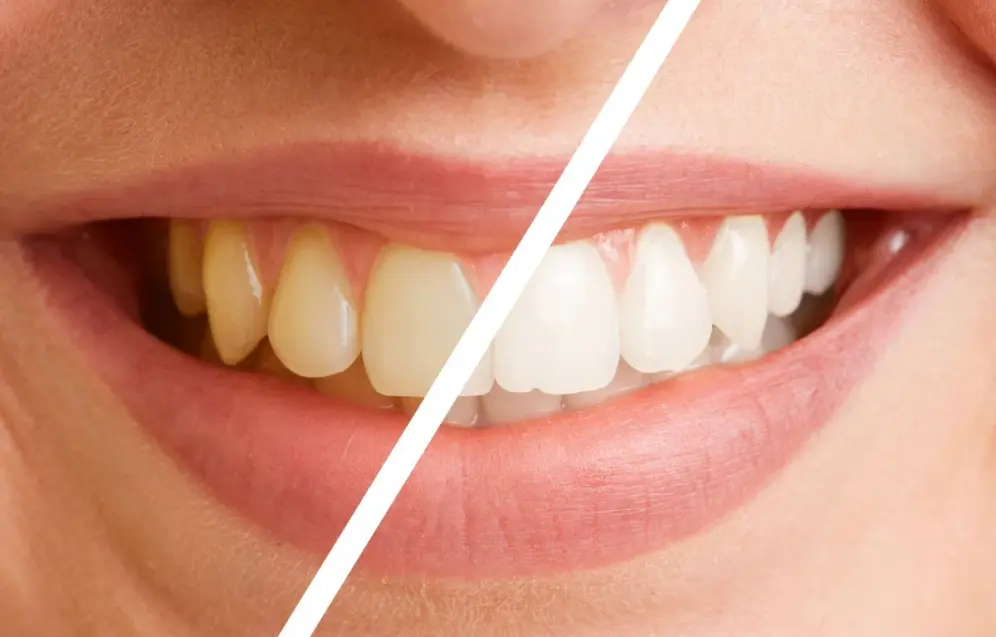
Before-and-after cases. Not stock photos. Real patient cases, ideally with some complexity to them. Any clinic can show you a whitening before-and-after. Show me a full-arch implant case with bone grafting. That tells me something.
Post-treatment follow-up. What happens after you leave Vietnam? A reputable clinic will have a clear protocol for post-op communication, warranty terms, and a plan for handling complications remotely. If they go quiet the moment you board your flight home, that tells you everything.
The Bottom Line
Does Vietnam have good dentists? Yes, absolutely. Some of the best I've worked with in my career are Vietnamese-trained, Vietnamese-born clinicians who chose to stay and build their practice here instead of emigrating. They're skilled, they're fast, and they've seen more cases than most of their peers abroad.
But Vietnam also has bad dentists, just like every other country does. The difference is that Vietnam's regulatory safety net has more holes in it, so the burden of choosing well falls more heavily on the patient.
My advice? Do your homework. Ask hard questions. Look at the clinic, not the country. And if something feels off when you walk through the door, trust that feeling.
"The best dentists in Vietnam don't need you to lower your standards. They'll meet the same standards you'd hold anyone to back home. That's the bar we set at Picasso, and it's the bar you should expect everywhere." - Albert Nguyen, Managing Director, Picasso Dental Clinic
Albert Nguyen
Managing Director of Picasso Dental Clinic. Over a decade building and operating multi-location dental clinics across Vietnam, serving 70,000+ international patients from 62+ countries.