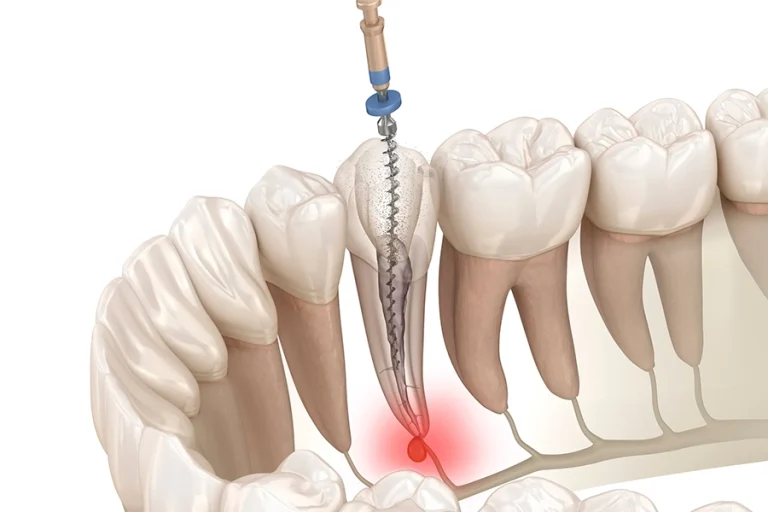
This is probably the most common misconception I hear at Picasso Dental Clinic, and I understand why it causes anxiety. I’m Dr. Emily Nguyen, and after performing thousands of root canals across our Vietnam locations since 2013, I can clear up this confusion with straightforward facts.
What Actually Happens During a Root Canal
The confusion stems from misunderstanding tooth anatomy. Your tooth has two sources of vitality: the pulp inside the root canals, and the periodontal ligament surrounding the root outside. The root canal procedure removes only the internal pulp, which contains the nerve and blood vessels that once nourished the tooth during development.
Once your tooth fully matures, usually by your early twenties, the internal pulp becomes less critical. The tooth receives most of its blood supply and nutrients from the surrounding periodontal ligament. This is why removing the infected or inflamed pulp doesn’t kill the tooth.
At our Ho Chi Minh City location, I explain it this way: imagine a building with both internal and external plumbing. We’re removing the internal system that’s become infected, but the external system continues supplying everything the structure needs. The building remains standing and functional.
The tooth stays firmly anchored in your jawbone. The periodontal ligament contains nerve fibers that detect pressure and positioning. This is why you can still feel when you bite down on a root canal treated tooth, even though you won’t feel hot or cold sensations anymore.
How Root Canal Treated Teeth Function
In my decade at Picasso Dental Clinic, I’ve observed that properly treated teeth function identically to natural teeth for everyday activities. You can chew normally, bite with full force, and the tooth responds to orthodontic movement if needed later. The main difference is purely sensory.
The tooth does become slightly more brittle over time because it’s no longer hydrated from within. This is why I typically recommend a crown after root canal treatment, especially for back teeth that handle heavy chewing forces. The crown isn’t because the tooth is dead, it’s protective reinforcement for a tooth that’s structurally more vulnerable.
Among our 70,000 plus patients from 65 nationalities, the root canal treated teeth that fail usually do so because of inadequate crown protection or poor oral hygiene, not because the tooth died. Bacteria can still cause problems around the root if you develop gum disease or if the crown seal breaks down.
Your immune system continues protecting the area. White blood cells travel through the periodontal ligament to fight any infection near the root tip. This is why some root canal infections heal naturally after treatment, your body’s defenses can reach the area and do their work.
Long Term Tooth Survival
The research and my clinical experience align perfectly here. Root canal treated teeth with proper crown restoration survive at rates exceeding 85% at 20 years. That’s remarkable longevity for teeth that patients often assume are doomed.
I’ve seen patients at our Da Lat clinic who had root canals in their twenties and still have those teeth functioning perfectly in their sixties. The key factors are quality initial treatment, good crown seal, and consistent oral hygiene. The tooth itself remains viable indefinitely if protected properly.
Some teeth do eventually fail, but usually from recurrent decay around the crown margin or vertical root fractures from heavy grinding forces. These are mechanical failures, not biological death. A truly dead tooth would become infected, loosen, and require extraction. Root canal treated teeth rarely follow this path when properly maintained.
Your bite mechanics remain normal. The periodontal ligament’s nerve fibers provide proprioception, the sense of where your tooth is in space. This lets you bite carefully on a cherry pit or adjust pressure automatically. Without this feedback, you’d constantly bite your cheek or break teeth from excessive force.
What Changes After Root Canal Treatment
The tooth will darken slightly over years, especially if it’s a front tooth. This happens because the internal structure no longer receives fresh fluid circulation. Modern bonding techniques and internal bleaching at our clinics can address this cosmetic concern.
You lose the early warning system that temperature sensitivity provides. A natural tooth hurts with cavities because the nerve responds to stimuli reaching the pulp. Your root canal treated tooth won’t signal decay this way, making regular dental checkups every six months essential for catching problems early.
The tooth remains susceptible to gum disease just like any other tooth. The periodontal ligament that keeps it alive can become inflamed from plaque buildup. I emphasize to patients across our Hanoi, Da Nang, and Ho Chi Minh City locations that the tooth needs the same brushing and flossing attention as before treatment.
If you’re facing a root canal or have questions about a tooth you’ve already had treated, I’m happy to discuss your specific situation at any of our four Vietnam locations.